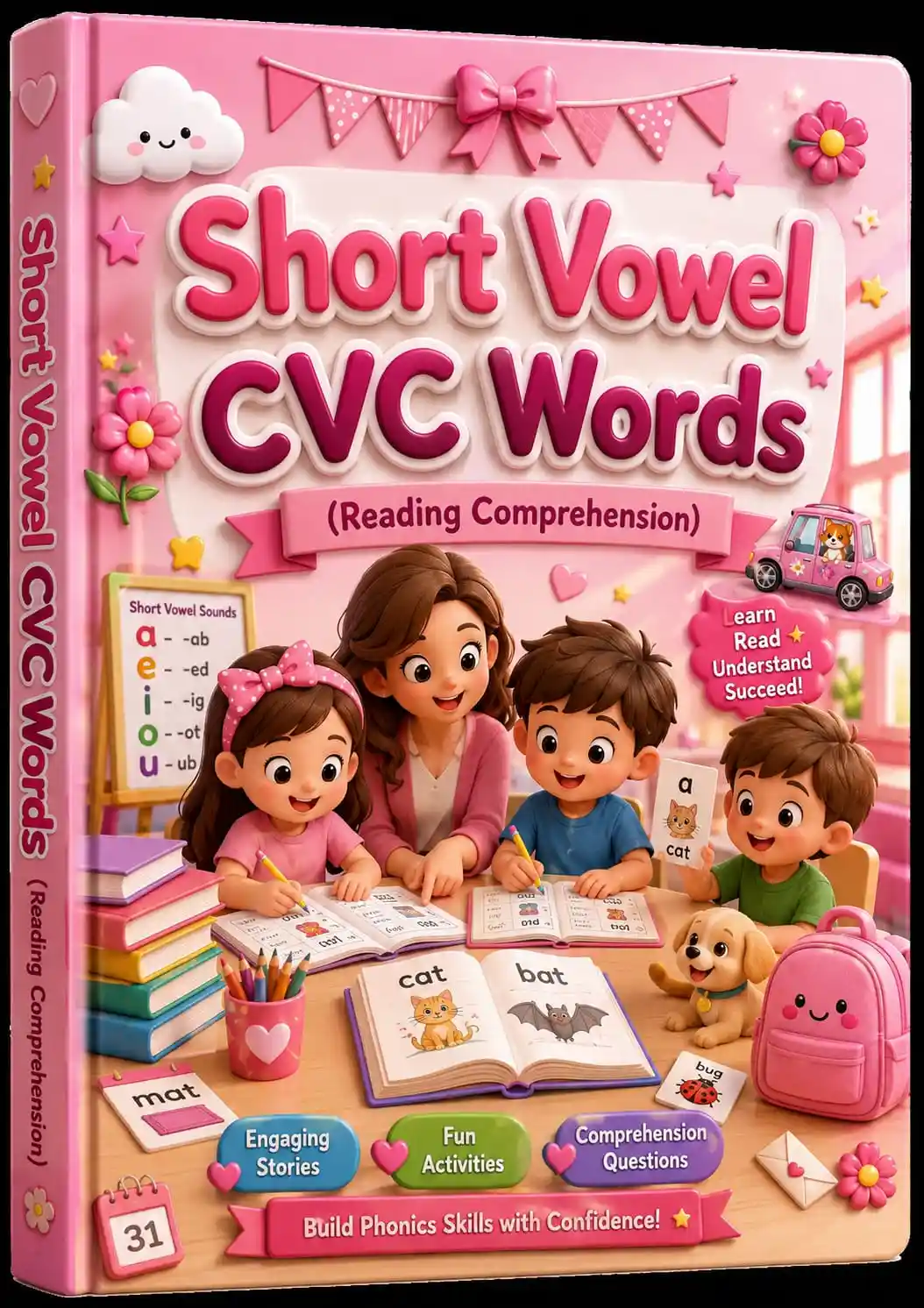
Short Vowel CVC Words Reading Comprehension – Build Early Reading Confidence
Short Vowel CVC Words Reading Comprehension is a valuable approach for helping beginning readers connect phonics skills with actual reading and understanding. CVC words are simple three-letter words made with a consonant, a vowel, and a consonant, such as cat, bed, pig, hot, and sun. Practicing these words in short passages can help children develop decoding, vocabulary, and comprehension skills at the same time.
What Are CVC Words?
CVC stands for Consonant-Vowel-Consonant. These words are often introduced to children after they have learned basic letter sounds. The short vowels a, e, i, o, and u are especially important because they appear in many beginner-level words.
For example:
- a: cat, map, bag
- e: bed, hen, red
- i: pig, sit, lip
- o: hot, dog, log
- u: sun, cup, bus
Learning these patterns gives children a foundation for reading longer and more complex words.
Why Reading Comprehension Matters
Phonics helps children read words, but reading is ultimately about understanding meaning. Short Vowel CVC Words Reading Comprehension activities combine decoding practice with simple stories and questions.
After reading a short passage, children might answer questions such as:
- Who is in the story?
- Where does the story happen?
- What happened first?
- What did the character do?
- What is the main idea?
These questions encourage children to think about what they have read rather than simply pronounce individual words.
Strengthen Short Vowel Skills
Short vowels can sometimes be confusing for beginning readers. Repeated practice with word families can help children recognize common patterns.
For example, children can practice:
-at: cat, bat, hat
-en: hen, pen, ten
-ig: pig, dig, wig
-og: dog, log, fog
-un: sun, run, fun
Reading these words in sentences helps children see how phonics patterns work in meaningful contexts.
Make Practice Engaging
Children are more likely to enjoy reading when activities are short, clear, and interactive. Parents and teachers can combine CVC reading passages with picture matching, word searches, sentence completion, and simple comprehension questions.
With Short Vowel CVC Words Reading Comprehension, learners can gradually move from sounding out individual words to reading complete sentences with greater confidence.
Simple Practice Routine
Set aside 10–15 minutes each day for focused reading practice. Start by reviewing a short vowel sound, read several CVC words, and then move to a short passage. Finish by asking the child to explain the story in their own words.
This routine supports phonics, reading fluency, vocabulary, and comprehension without overwhelming young learners.
Final Thoughts
Short Vowel CVC Words Reading Comprehension provides a useful bridge between phonics instruction and meaningful reading. By practicing short vowel patterns inside simple sentences and stories, children can strengthen decoding while learning to understand what they read.
With consistent encouragement and regular practice, young readers can build the skills and confidence they need for more advanced reading.